Transforming Cervical Cancer Care in Homa Bay County
Cervical cancer remains one of the leading causes of cancer-related deaths among women in Kenya, largely driven by persistent HPV infections and worsened by high HIV prevalence. To change this narrative, City of Hope, in partnership with Matata Nursing Hospital, Homa Bay County Hospital, Jaramogi Oginga Odinga Teaching and Referral Hospital (JOOTRH), and the Sambaza Group, has launched a groundbreaking cervical cancer screening and treatment initiative in Homa Bay County.
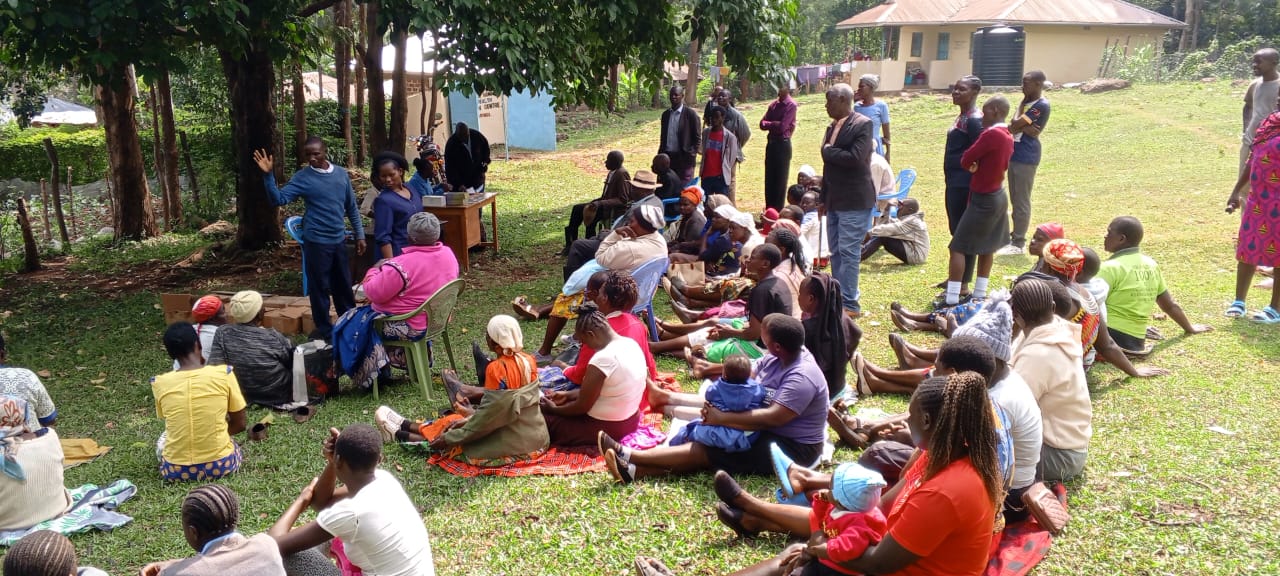
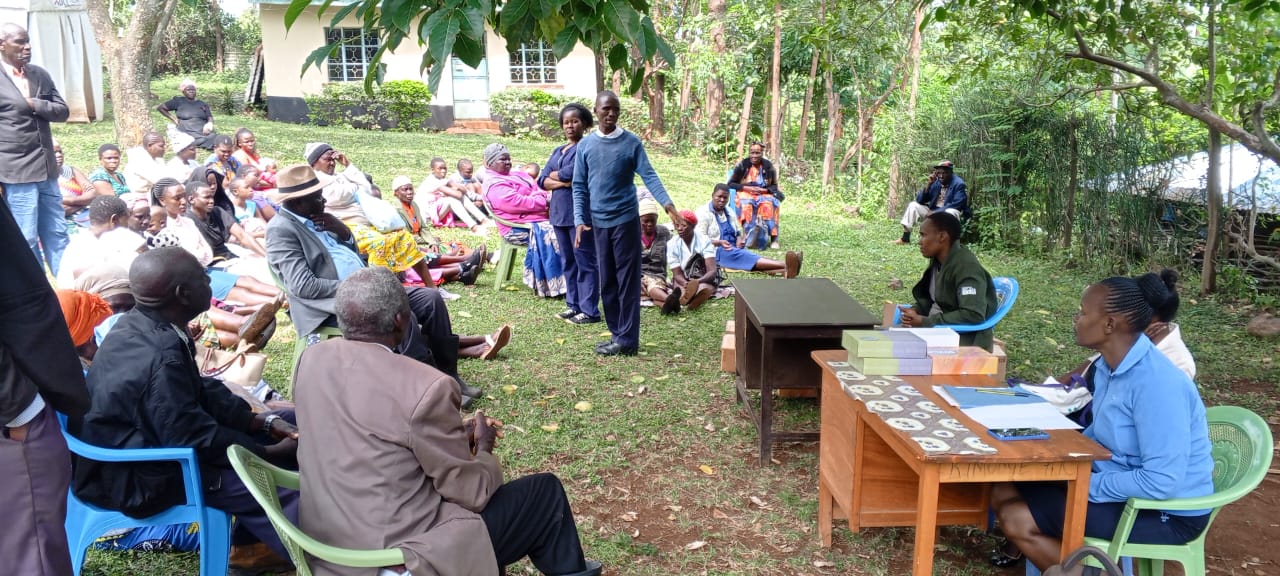
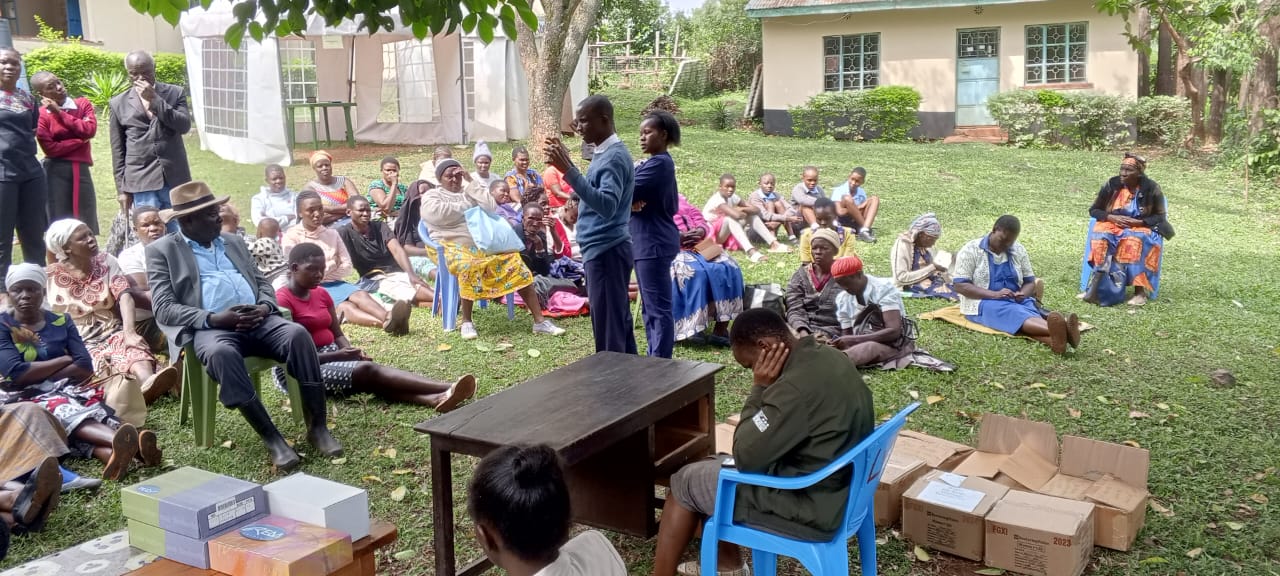
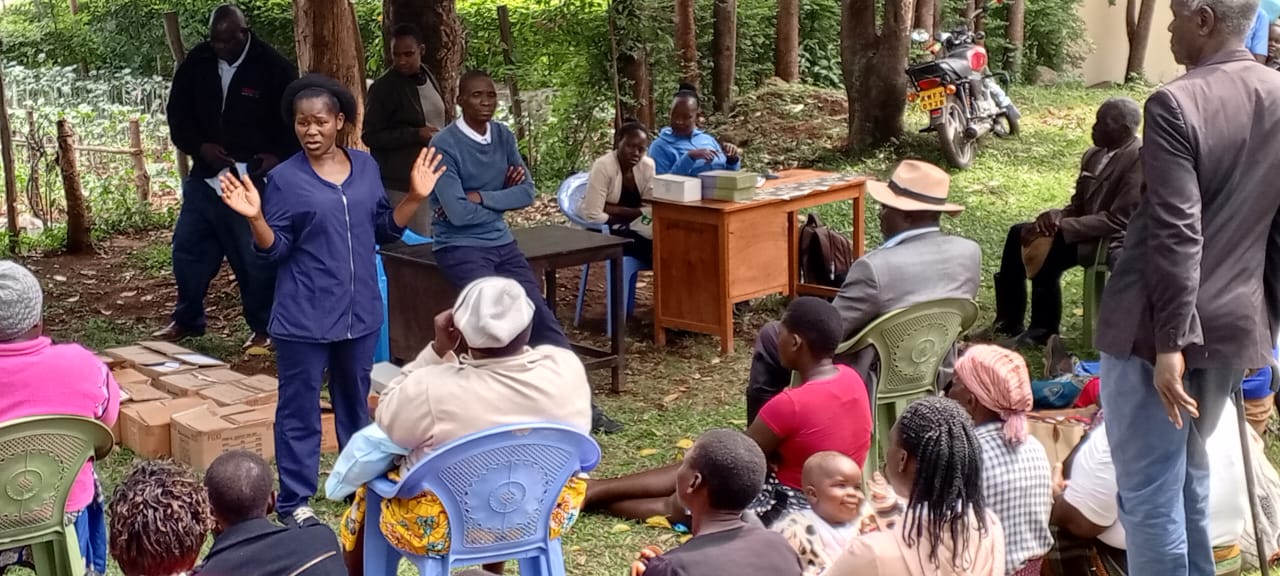
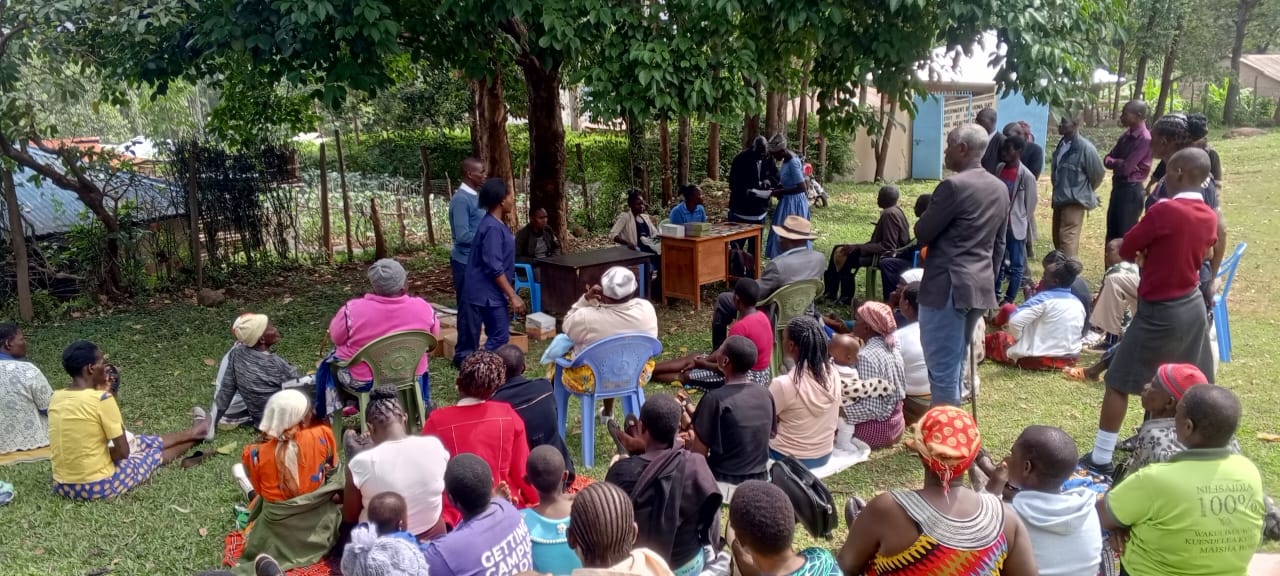
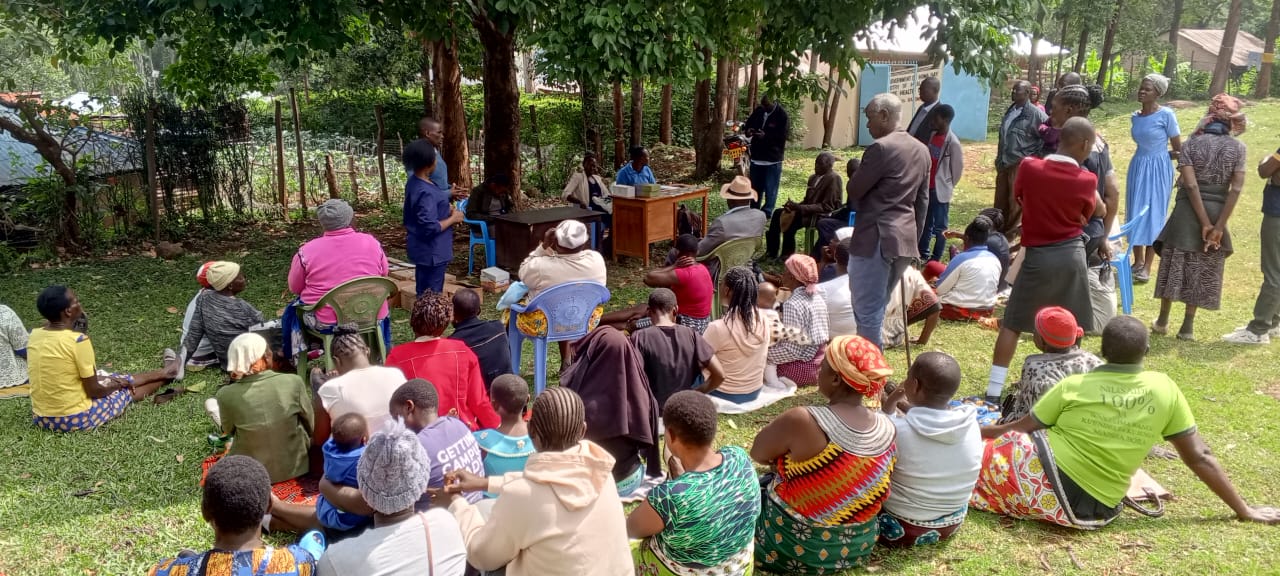
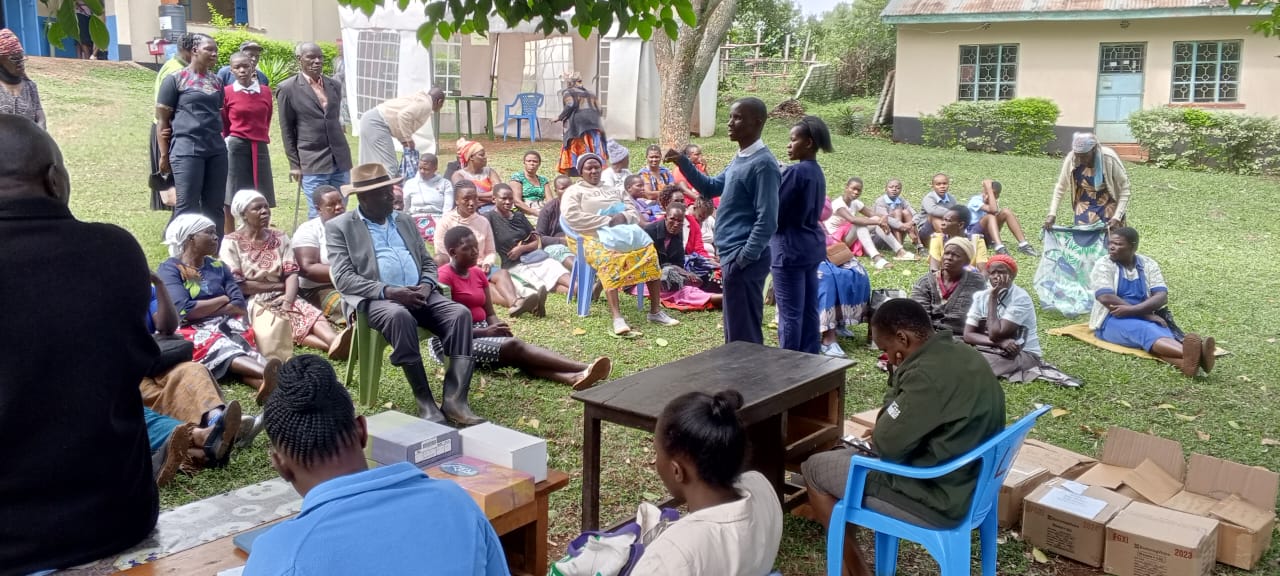
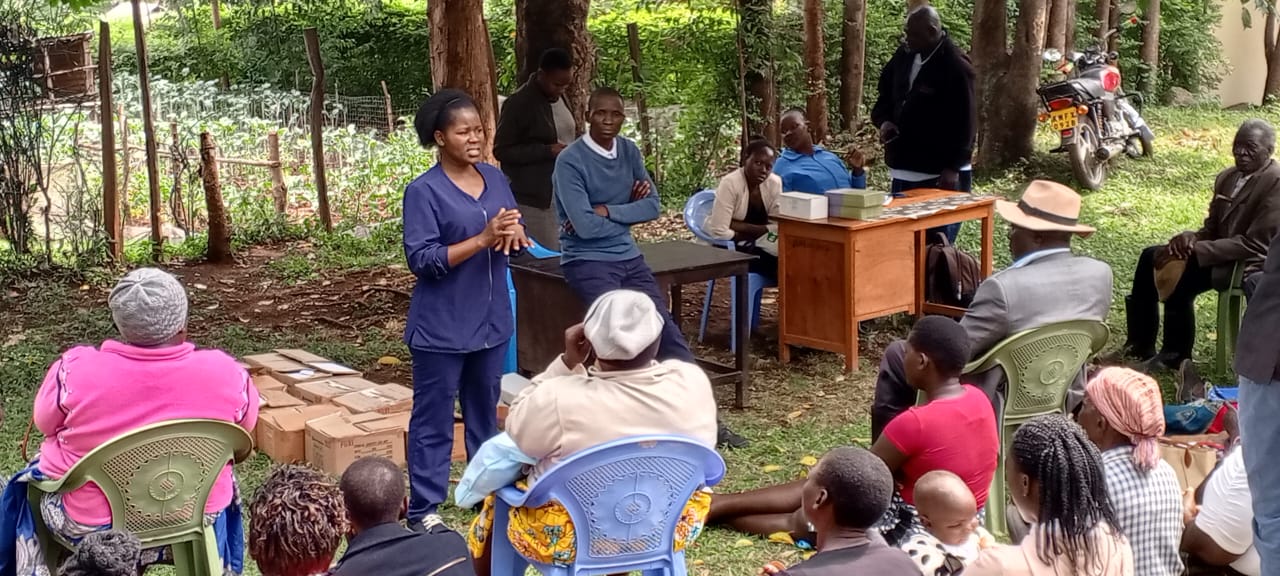
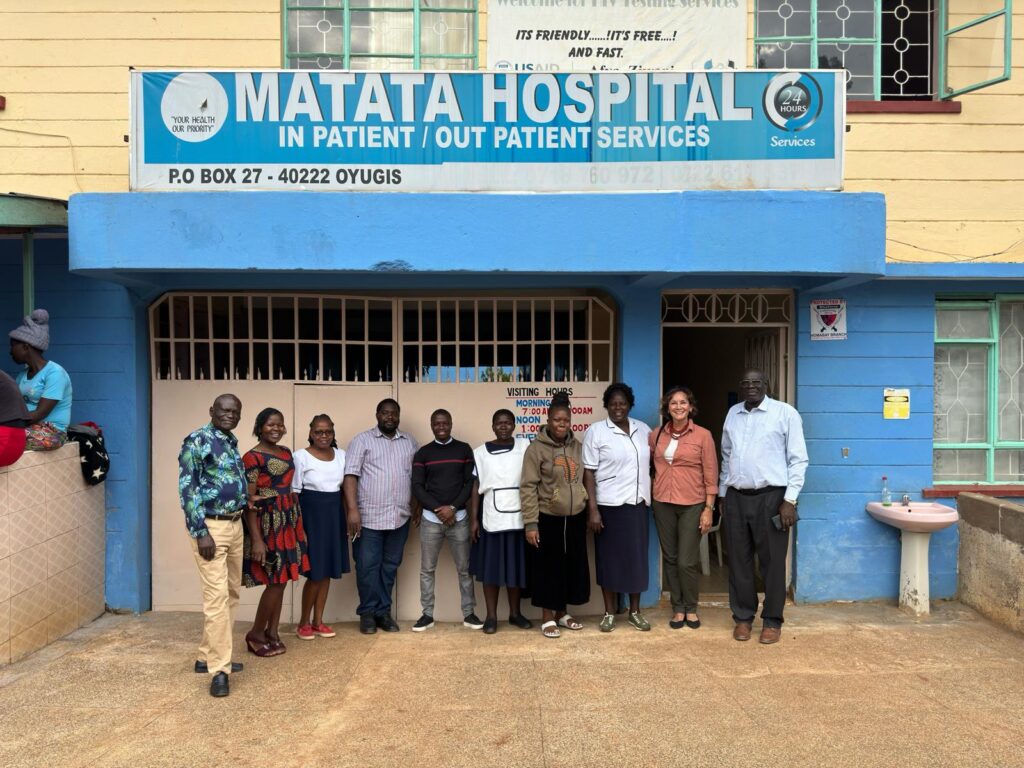
In 2024, City of Hope invested $100,000 to purchase essential equipment, reagents, and supplies, enabling community and clinic-based HPV screening for women across the county. This support allowed over 4,500 women to be screened, with 674 women testing HPV positive. Women diagnosed with pre-cancerous lesions received no-cost treatment at Matata Nursing Hospital and Homa Bay County Hospital, while those with invasive cancer were referred for advanced care at JOOTRH.
Building on this success, City of Hope is committed to investing an additional $100,000 to:
- Conduct follow-up studies on the women treated in 2024 to assess long-term outcomes.
- Expand HPV screening to reach 8,000 more women across Homa Bay County.
- Strengthen patient navigation services to ensure timely treatment and follow-up care in collaboration with Matata, Homa Bay County Hospital, and JOOTRH.
This initiative—the first of its kind in the region—is not only saving lives today but also shaping future health policies to improve cervical cancer outcomes in Kenya and other low- and middle-income countries.
Impact at a Glance
- 4,500 women screened in Homa Bay County
- 674 HPV-positive women identified
- 500 women treated for pre-cancerous lesions
- 7 women referred for advanced cancer care
- $200,000 investment by City of Hope (2024–2025) in screening, treatment, and follow-up research
Our Next Big Goal: Reaching 50,000 Women in 3 Years
The success of our pilot program proves that early screening and treatment save lives. Yet, thousands of women in Homa Bay County and beyond still lack access to these essential services.
We are setting an ambitious goal: to expand cervical cancer screening from 8,000 to 50,000 women in the next three years. Achieving this vision requires collaboration, funding, and committed partners.
How You Can Help
🌍 Donate: Your support will directly fund HPV test kits, treatment equipment, and patient navigation services to ensure women receive timely, life-saving care.
🤝 Collaborate: We welcome partnerships with foundations, NGOs, and corporations interested in supporting women’s health, cancer prevention, and global equity in healthcare.
👩⚕️ Join Our Mission: We are also recruiting medical professionals passionate about working in low-resource settings. Volunteers will have the opportunity to make a life-changing impact while gaining experience in global oncology. Accommodation will be provided during their stay. For clinicians coming from the U.S., the Sambaza Group will work to identify legal mechanisms to convert your time donation into tax savings, ensuring your commitment also provides financial benefits at home.
Every dollar, every partnership, and every professional who joins us brings us closer to eliminating cervical cancer as a public health threat in Homa Bay County.
✨ Together, we can save lives, empower women, and build a healthier future for generations to come.
[Support the Mission →]
💙 Give to Save Lives
Your gift goes directly toward screening, treatment, and patient support for women in Homa Bay County. Every contribution brings us closer to eliminating cervical cancer.
Sambaza Group is a California-based, federally approved 501(c)(3) nonprofit (EIN: 99-2001304). All U.S. donations are tax-deductible to the extent allowed by law.
Suggested Donation Levels
- $25 → Covers HPV screening for 1 woman
- $100 → Provides treatment for 2 women diagnosed with pre-cancerous lesions
- $250 → Funds training for a Community Health Volunteer (CHV) to deliver door-to-door screenings
- $500 → Supports a community screening event reaching up to 50 women
- $1,000 → Equips a clinic with essential supplies and HPV test kits for 100 women
- $5,000 → Supports a mobile screening and treatment camp reaching an entire village
- $10,000 → Provides a thermal ablation or LEEP machine, giving long-term treatment capacity for hundreds of women
- $25,000+ → Becomes a major partner, helping us scale the program toward our 50,000 women screened goal in the next 3 years
✨ Every gift, big or small, helps us save lives, prevent cancer, and empower women with access to care they deserve.
Home Bay County HPV/CC Screening Program Framework.
Overview of the HPV/CC screening program implemented in Homa Bay County, Kenya. Women are screened at either a local healthcare facility, centralized community events, or decentralized inhome visits. Following sample analysis and quality control check, women receive results and specific recommendations according to HPV status, as per WHO guidelines.
Women with invalid results are advised to re-test. Women negative for HPV are advised to re-test after 3-5 years according to HIV status. Women positive for HPV types 16 and/or 18, highest carcinogenic subtypes, undergo a “screenand- treat” treatment approach, in which they receive a cervical assessment aided by VIA, and are referred for appropriate treatment at Matata Nursing Hospital at no-cost for pre-CC/non-ICC lesions, or to JOOTRH for ICC.
Women positive for all other high-risk types with somewhat lower carcinogenicity, undergo a “screen, triage and treat” approach, in which women similarly receive a VIA-aided cervical assessment, but are only recommended for treatment if a cervical lesion is identified; those that do not have lesions are advised to retest after 1-2 years according to HIV status. Schematic created on Biorender.com.
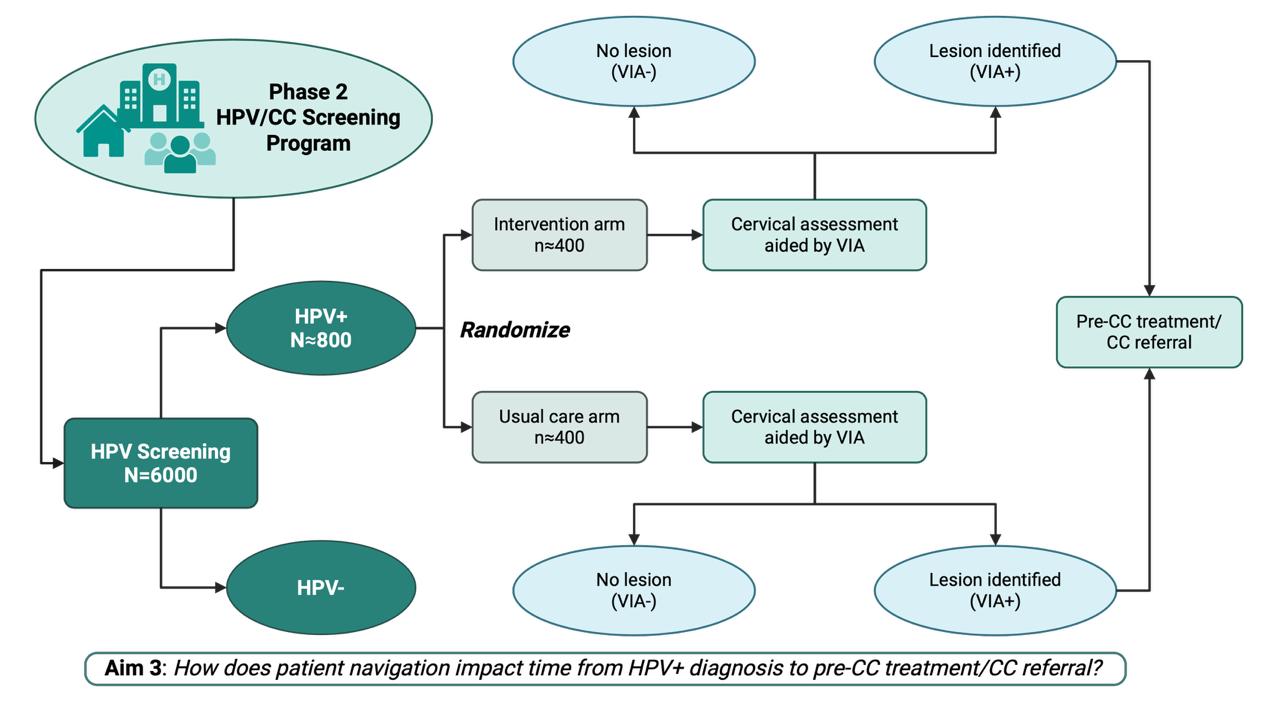
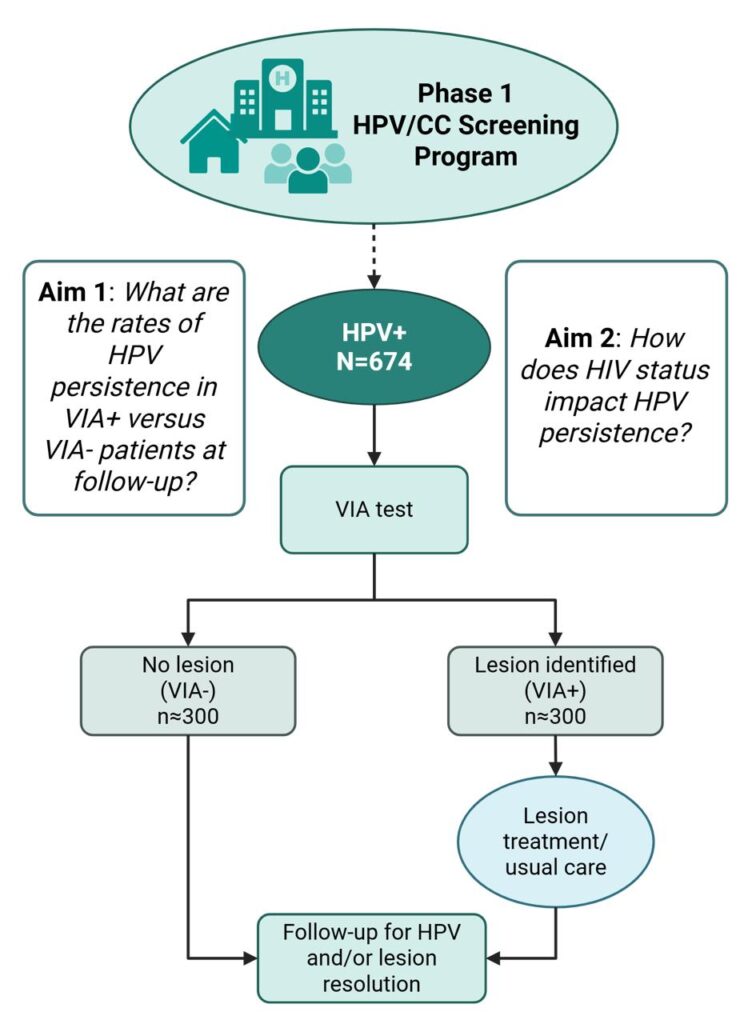
Phase 1 was implemented as described in the main text. To determine the rates of HPV persistence in VIA+ versus VIA- women within the Phase 1 HPV+ population (Aim 1), we will follow-up women at the recommended interval and re-test for HPV and/or lesions (VIA test). To determine the impact of HIV status on HPV persistence in this population (Aim 2), we will analyze the HPV screening and VIA test results at follow-up based on HIV status. Schematic created on Biorender.com.
Gallery